

The Role of Technology in Enhancing Natural Disaster Response
The unpredictable nature of natural disasters poses a significant challenge to societies worldwide. As climate change accelerates, the need for advanced predictive tools has never been more crucial. Here, machine learning emerges as a powerful ally in understanding and mitigating the impact of these catastrophic events. By leveraging complex algorithms and vast datasets, machine learning technologies present innovative solutions to age-old problems associated with disaster prediction and response.
Why Machine Learning for Disaster Prediction?
Machine learning models bring a new dimension to disaster forecasting by:
- Analyzing vast datasets from multiple sources.
- Identifying patterns that may elude traditional methods.
- Providing real-time predictions to guide emergency responses.
For instance, in the United States, recent hurricanes and wildfires have underscored the potential of these technologies. Machine learning algorithms have been employed to:
- Forecast hurricane paths based on historical and environmental data, which has proven vital in managing evacuation routes and resource allocation.
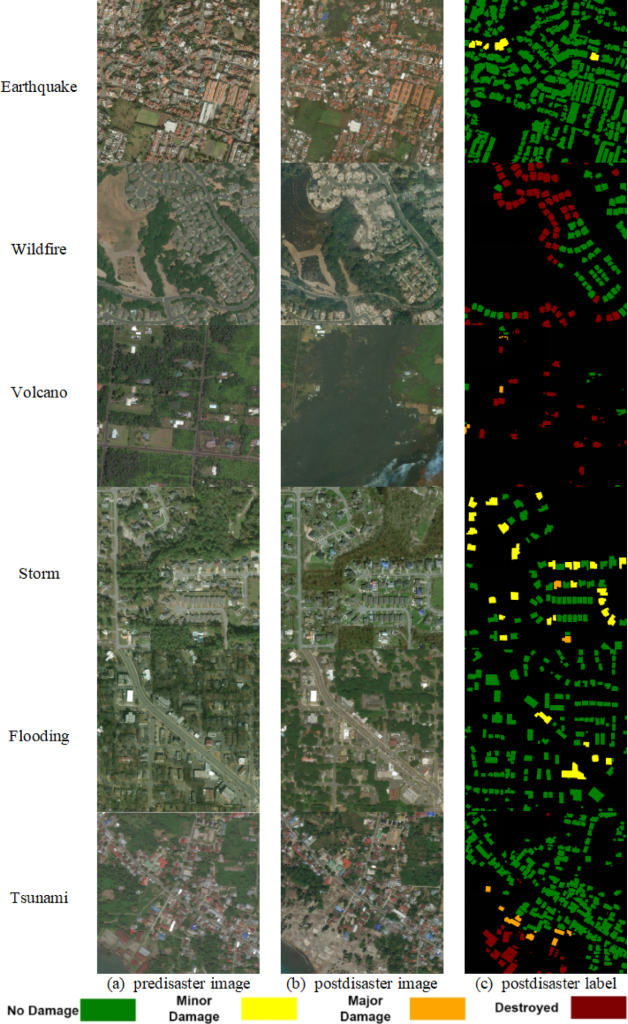
- Predict wildfires by analyzing satellite imagery and weather conditions, allowing for timely interventions and community alerts to reduce property damage and loss of life.
- Assess flood risks from heavy rainfall patterns combined with topographical data, aiding municipalities in preparing infrastructure and ensuring the safety of their residents.
These examples illustrate how machine learning provides actionable insights that significantly enhance disaster preparedness and response. Traditional methods often rely on simplified models that can fail to account for the complexities of both natural systems and human response, whereas machine learning offers an adaptive approach that evolves with new data.
The Path Ahead
As researchers and technologists collaborate, the development of machine learning models continues to evolve. These innovations promise faster and more accurate predictions, ultimately saving lives and minimizing economic impacts. For example, initiatives like the National Oceanic and Atmospheric Administration’s (NOAA) use of machine learning in weather modeling are pushing the boundaries of what is achievable in real-time disaster predictions. Communities that utilize these technologies can better prepare and respond to threats, fostering resilience against an increasingly volatile climate.
The future holds promising advancements in disaster preparedness, aiming to create communities that are not only aware of impending dangers but equipped with the tools to navigate them. As machine learning techniques further integrate into emergency management strategies, they pave the way for a proactive disaster response framework that could redefine how societies interact with the natural world, ultimately empowering them to face whatever challenges lie ahead.
DIVE DEEPER: Click here to discover the ethical challenges
Transforming Data into Insights: The Foundation of Machine Learning Models
The effectiveness of machine learning in natural disaster prediction relies heavily on the quality and variety of data sources utilized in model development. With the explosion of data generated from satellites, sensors, social media, and geographic information systems (GIS), machine learning models can draw from a diverse range of inputs to enhance accuracy and reliability. This confluence of information enables researchers to create algorithms that can predict occurrences such as hurricanes, floods, and earthquakes with a level of granularity that traditional methods lack.
Data Acquisition: The Cornerstone of Effective Modeling
Successful machine learning applications for disaster prediction hinge on comprehensive data collection. This process involves gathering information that not only includes historical data but also real-time environmental observations. For instance, data sources may encompass:
- Satellite imagery: High-resolution images facilitate the monitoring of weather patterns and land use changes that are predictors of disasters.
- Weather data: Meteorological information is crucial for understanding current trends and forecasting future events, especially with rising global temperatures.
- Seismic data: In regions prone to earthquakes, real-time monitoring of seismic activity can provide vital early warnings.
- Drones and IoT Sensors: Equipped with advanced technology, drones and Internet of Things (IoT) sensors are deployed to gather localized data in hard-to-reach or dangerous areas.
- Social media analytics: By analyzing posts and check-ins, researchers can gauge public sentiment and immediate responses during disasters, which can inform future predictions.
These diverse data sets are processed and analyzed using machine learning algorithms, revealing patterns and correlations that were previously undetectable. This ability to uncover hidden insights is particularly critical in rapidly changing scenarios, enabling emergency responders to allocate resources more efficiently and effectively.
Algorithm Selection and Training
The choice of algorithm plays a pivotal role in the successful development of predictive models. Various machine learning techniques, such as decision trees, neural networks, and ensemble methods, offer distinct advantages depending on the nature of the data and the specific disaster being studied. For example, deep learning models, which are designed to analyze complex data structures, have been making significant strides in image classification for predicting flooding events based on satellite imagery.
Training these algorithms involves feeding them with substantial amounts of data to improve their predictive performance. The goal is to minimize error rates and enhance their ability to forecast events accurately. Continuous refinement through techniques such as cross-validation ensures models adapt as new data becomes available, making them increasingly reliable over time.
As machine learning techniques advance, they hold the promise of transforming how societies prepare for and respond to natural disasters. The blend of rich data sets and sophisticated algorithms marks a new era in disaster management, where informed decision-making can significantly reduce the risks posed by nature’s unpredictability. Through an ongoing commitment to research and development, these models stand to revolutionize the field, enhancing resilience and safety in communities across the United States and beyond.
Exploring the Advantages of Machine Learning in Natural Disaster Prediction
The Development of Machine Learning Models for Natural Disaster Prediction is an emerging field that holds significant promise for enhancing our predictive capabilities and improving disaster response strategies. Below is a table that highlights two key advantages associated with this innovative technology.
| Advantage | Description |
|---|---|
| Increased Accuracy | Machine learning algorithms can analyze vast amounts of data to detect patterns and anomalies, enabling more accurate predictions of natural disasters. |
| Timely Responses | These models provide this data rapidly, allowing emergency services to mobilize and respond more effectively before disasters strike, ultimately saving lives. |
The use of machine learning in predicting natural disasters not only enhances our abilities to forecast such events but also empowers communities to develop more resilient infrastructure. As researchers delve deeper into algorithms and data analytics, we can expect to see even more groundbreaking advancements in this field that could revolutionize how we approach disaster preparedness and response. Understanding these benefits is crucial for policymakers, researchers, and the general public alike, as they pave the way for smarter adaptations to our changing planet.
DISCOVER MORE: Click here to learn about the impact of natural language in business decisions
Pioneering Techniques in Machine Learning for Natural Disaster Forecasting
As the field of machine learning evolves, innovative techniques have emerged that promise to enhance the forecasting capabilities for natural disasters. With advances in computational power and algorithm sophistication, researchers are tapping into new methodologies that leverage big data in unprecedented ways. This section explores some of these pioneering approaches and their implications for natural disaster prediction.
Adaptive Learning Models
One of the most exciting advancements in machine learning is the development of adaptive learning models. These models are designed to continuously learn and update from new data streams, allowing them to improve their predictive accuracy over time without requiring human intervention. For instance, researchers have utilized adaptive models to predict wildfire outbreaks by incorporating live data from weather stations, satellite imagery, and even vegetation composition.
By utilizing algorithms that can perform automated feature selection, these models optimize the parameters impacting fire outbreaks, while also accounting for changing environmental conditions influenced by climate change. This adaptability is crucial, as it enables the models to remain relevant even as the context within which disasters occur evolves.
Integrating Machine Learning with Advanced Simulation Techniques
Another groundbreaking approach involves integrating machine learning with advanced simulation techniques, such as agent-based modeling or fluid dynamics simulations. These hybrids can provide a more comprehensive understanding of the potential impacts of natural disasters. For instance, researchers have successfully combined machine learning algorithms with hydrological models to simulate river basin flooding scenarios, allowing for more accurate predictions of flooding risks in urban areas.
These integrated models create a feedback loop where simulated outcomes can inform machine learning models, while real-world data gathered from past incidents can fine-tune simulations. This dual approach enhances the robustness of predictions and equips policymakers with actionable insights for flood risk mitigation.
Geospatial Machine Learning
Geospatial machine learning is revolutionizing how we analyze spatial data related to natural disasters. By merging traditional statistics with machine learning techniques, researchers are creating models that can geographically forecast disaster occurrences with remarkable precision. Techniques like geographical information science (GIS) and spatial clustering enable researchers to identify patterns over geographical areas, thus predicting how disasters may affect specific regions, which is crucial in large and diverse nations like the United States.
For example, studies have shown that applying convolutional neural networks (CNNs) to spatial datasets can yield predictive insights about earthquake occurrences based on tectonic plate movements. This spatial approach not only enhances understanding but also drives home the importance of regional preparedness in disaster management efforts.
Community-Based Predictive Models
A significant trend is the development of community-based predictive models, which incorporate local knowledge and data into algorithm training. The concept is simple yet powerful: by utilizing input from local communities, researchers can capture unique environmental factors and socio-economic elements that global models might overlook. Collaborative platforms allow data sharing among citizens, scientists, and emergency management agencies, thus fostering a holistic approach to disaster prediction.
For instance, in places such as California, local residents have begun using mobile applications to report minor seismic activities or landslide risks. This citizen science approach not only enriches the data pool but enhances public awareness and preparedness.
As machine learning continues to develop, the combination of these innovative techniques stands to redefine the landscape of natural disaster prediction. Emphasizing adaptability, integration, geographical analysis, and community engagement fosters a more informed society capable of responding to the unpredictability of natural disasters with confidence and resilience.
DISCOVER MORE: Click here to learn about the applications of neural networks in medicine
Conclusion
The development of machine learning models for natural disaster prediction marks a transformative shift in how we approach disaster preparedness and response. By harnessing innovative techniques such as adaptive learning models, geographical machine learning, and community-based predictive models, we can significantly enhance our understanding of natural disasters and their impacts. These technologies not only enable real-time data analysis but also encourage collaboration and involvement from local communities, ensuring that predictions are more accurate and relevant.
As the implications of climate change intensify, the intersection of big data and machine learning becomes increasingly critical. Integrating advanced simulation techniques allows for comprehensive scenarios that take into account a myriad of environmental factors, enhancing risk assessment and management strategies. For regions prone to specific disasters, like hurricanes or wildfires, these advancements offer invaluable insights that can bolster local preparedness and community resilience.
Ultimately, the continued evolution of machine learning holds promise for a future in which communities can proactively mitigate the impacts of natural disasters. As researchers push the boundaries of technology and collaboration, they pave the way for more strategic disaster management solutions. The journey towards a safer, more resilient society relies heavily on our willingness to embrace these smart innovations and adapt them to our unique environmental landscapes.
As we delve deeper into this fascinating arena, it becomes evident that the fusion of technology and human insight will be indispensable for navigating the complexities of natural disaster prediction and response in the years to come.


 Linda Carter